
Mastering the Machining of Exotic Alloys: Advanced Strategies for Titanium and Superalloys
Introduction: The New Frontier of Precision
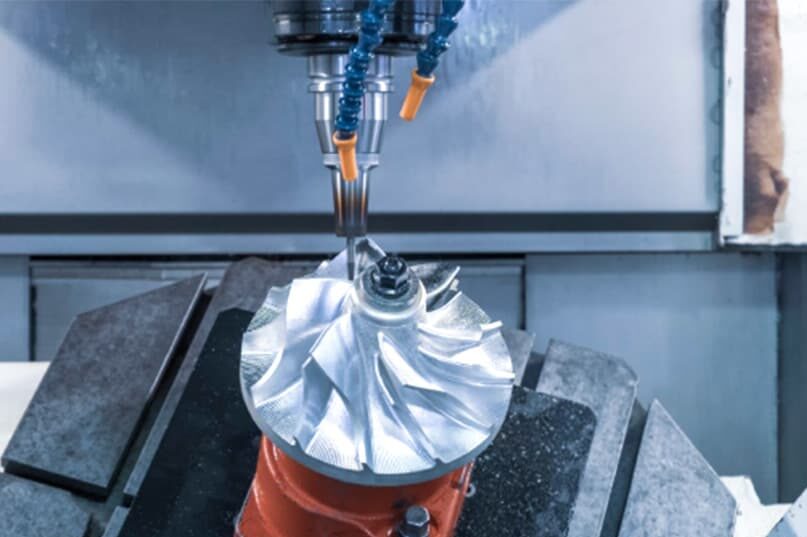
In the modern landscape of high-performance engineering, material selection is the primary driver of product innovation. From the lightweight, high-strength structural components of next-generation aircraft to the biocompatible, fatigue-resistant housings of implantable medical devices, engineers are increasingly turning to exotic materials. Titanium alloys and nickel-based superalloys (such as Inconel) represent the pinnacle of material science. However, these materials are notoriously difficult to machine. Their superior mechanical properties, which make them ideal for extreme environments, create profound challenges for standard CNC processes. For contract manufacturers, mastering the machining of these exotic alloys is not just a capability—it is a competitive necessity. This article explores the physical challenges of machining these materials and outlines the advanced technical strategies required to achieve success.
The Physics of Difficulty: Why Exotic Alloys Resist Machining
To master the machining of titanium and superalloys, one must first understand the fundamental physical characteristics that make them “difficult to machine.” Unlike standard aluminum or mild steel, these alloys exhibit behavior that aggressively degrades cutting tools and challenges process stability:
Low Thermal Conductivity: Titanium and nickel alloys are poor conductors of heat. During the cutting process, heat does not dissipate through the chip; instead, it is localized almost entirely at the cutting edge of the tool. This localized heat causes rapid thermal softening of the tool tip, leading to accelerated wear, deformation, and eventual tool failure.
High Chemical Reactivity: At high cutting temperatures, these alloys exhibit high chemical affinity for most tool materials. This leads to adhesion (welding) between the workpiece material and the cutting edge. This phenomenon creates a “built-up edge” (BUE), which breaks off periodically, tearing the coating from the carbide substrate and damaging the workpiece surface integrity.
High Work Hardening Rates: These materials are designed to resist deformation. When subjected to the pressure of a cutting tool, the material layer immediately beneath the cutting zone undergoes intense strain, significantly increasing in hardness before the next pass can remove it. This necessitates higher cutting forces and creates a cycle where the tool must constantly cut through an artificially hardened surface layer.
Advanced Technical Strategies for Success
To overcome these barriers and maintain sub-micron tolerances, our production cell employs a multi-faceted strategy that treats the tool, the material, and the process as a unified, optimized system.
1. Specialized Tooling and Geometry Optimization Standard, off-the-shelf tooling is insufficient for exotic alloys. We utilize ultra-fine-grained carbide grades that provide the perfect balance of toughness and hardness. Furthermore, we employ specialized PVD coatings—specifically AlTiN (Aluminum Titanium Nitride) or TiAlN—which provide a robust heat barrier and chemical resistance against the nickel-rich environment of superalloys. The geometry of the tool is equally critical: we utilize variable-helix flute designs to dampen harmonic vibrations (chatter), and high-positive rake angles to ensure the tool shears the material rather than rubbing against it, thereby minimizing work hardening.
2. High-Pressure Coolant (HPC) Systems The primary solution to the thermal conductivity issue is the effective application of high-pressure cooling. We utilize HPC systems that deliver coolant directly to the tool-chip interface at pressures exceeding 70 bar. This serves two functions: first, it rapidly evacuates the heat from the cutting zone, preserving the tool’s hardness; second, it forces the chips to break into small, manageable pieces before they can become entangled with the part, protecting the delicate surface finish.
3. Cycloidal (Trochoidal) Machining Paths In traditional machining, maintaining a constant engagement (depth of cut) is standard. However, when cutting titanium, this leads to variable tool loads and heat spikes. We use advanced CAM software to implement cycloidal tool paths. By maintaining a small, constant radial engagement and varying the tool path in a circular, rolling motion, we ensure that the tool is never overwhelmed by excessive force. This maintains a uniform chip thickness, significantly extending tool life and ensuring that the internal stress of the part remains controlled throughout the process.
Surface Integrity and Quality Assurance
For aerospace and medical applications, the surface state of the part is as important as its dimensional accuracy. Exotic alloys are sensitive to “metallurgical damage”—micro-cracks or phase changes caused by excessive heat.
Our QA protocol includes:
Micro-Hardness Testing: We perform cross-sectional hardness testing to ensure the machining process has not compromised the material’s structural integrity.
Residual Stress Management: Post-machining, parts may undergo controlled chemical milling or specific stress-relieving heat treatments to eliminate tensile stresses induced during the cut, replacing them with favorable compressive stresses that enhance fatigue life.
Non-Destructive Testing (NDT): For critical components, we employ fluorescent penetrant inspection (FPI) to guarantee that the final part is free of the micro-cracks that are common in incorrectly machined exotic alloys.
Turning Challenges into a Competitive Edge
The machining of titanium and nickel-based superalloys is a rigorous discipline that rewards precision, patience, and deep technical knowledge. By integrating high-pressure cooling, optimized cutting geometry, and intelligent tool-pathing, we transform these “super-materials” into components that push the boundaries of industrial capability. When your project demands the high-performance characteristics of exotic alloys, you need a manufacturing partner who understands the physics, not just the code.